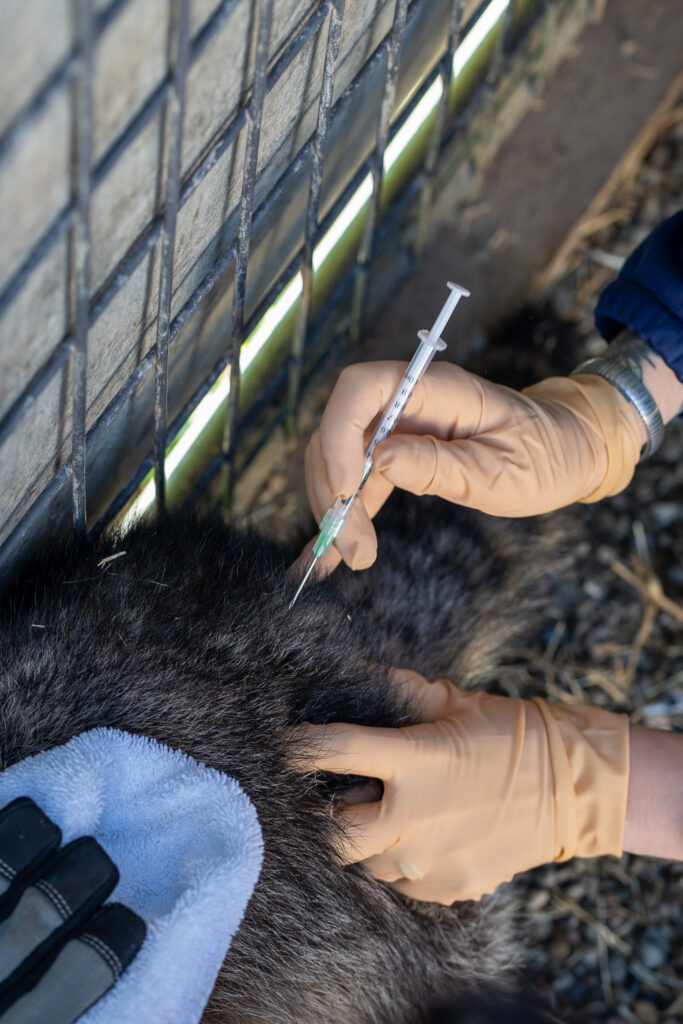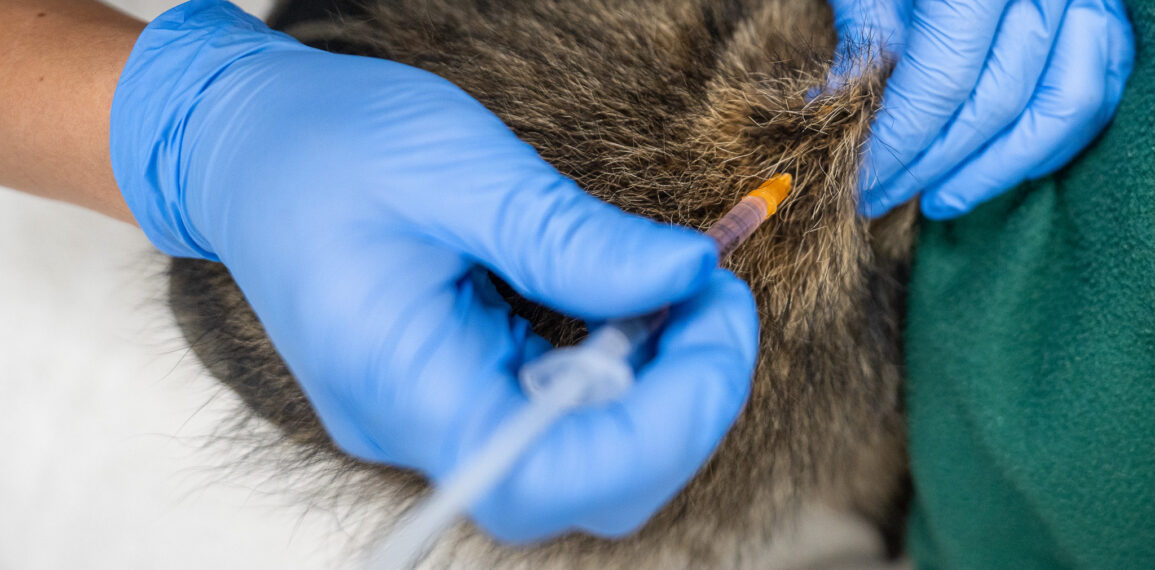
Did you know that we vaccinate our rabies-vector wildlife patients before they’re released back into the wild?
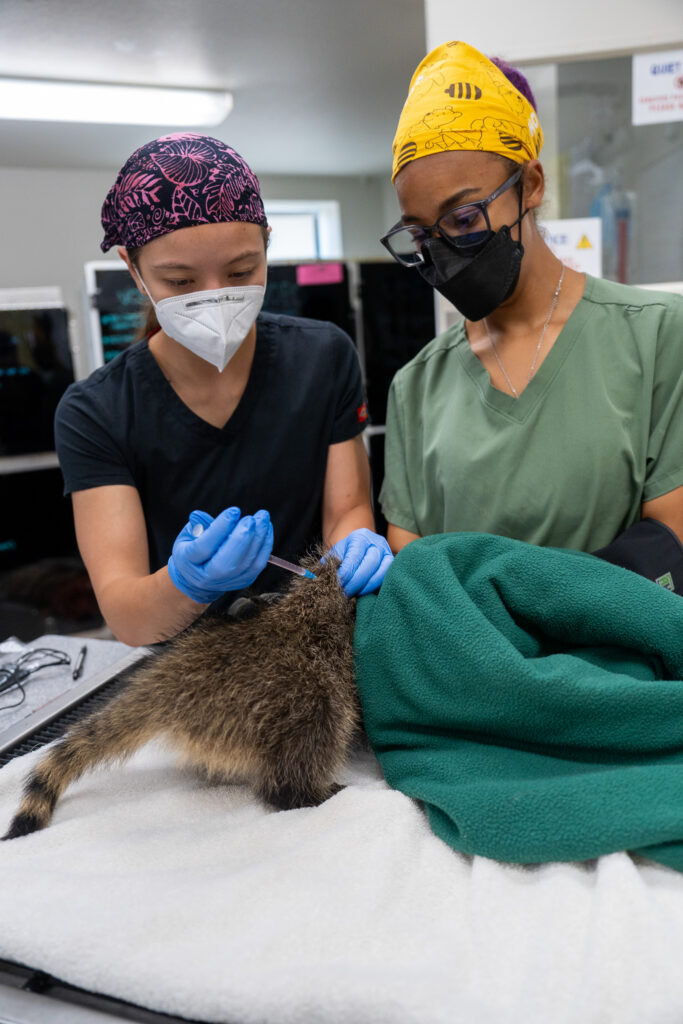
Every raccoon, skunk, fox, and coyote in our care receives multiple vaccinations as part of their rehabilitation. It’s an extra investment in each animal’s health—and an important step toward helping them return to the wild with the best possible chance of survival.
Why vaccinate wildlife?
1. It helps protect wildlife, pets, and people.
We work with wildlife living in and around the Sacramento community, which means many of the animals we rehabilitate will eventually return to environments shared with people and domestic animals.
Vaccinating our patients helps reduce the risk of disease transmission and supports a healthier coexistence between wildlife, pets, and people.
There’s also encouraging evidence that wildlife rabies encounters in Sacramento have declined in recent years. According to the California Department of Public Health, reported animal rabies encounters with wildlife in Sacramento were:
- 2026: 6 so far
- 2025: 11
- 2024: 17
- 2023: 12
2. It helps protect our patients while they’re in rehabilitation.
Disease prevention is especially important in a rehabilitation setting, where large numbers of animals may be housed in close proximity while they recover and prepare for release.
Vaccinating patients against diseases such as distemper is one way we can help reduce the risk of outbreaks within the facility and protect the animals in our care.
The cost of keeping wildlife healthy
There is, of course, a significant cost associated with vaccinating wildlife. Vaccines are generally developed and approved for domestic animals, so their use in wildlife is considered off-label. Vaccinations are rarely donated to us, which means we purchase them ourselves.
At Wildlife Care Association, it costs approximately $30 to fully vaccinate one animal.
And we’re vaccinating more animals than ever.
So far this year, we’ve vaccinated 132 wildlife patients. For comparison, we vaccinated 93 animals in all of 2025, 79 in 2024, and 74 in 2023.
That increase is just one more reflection of how busy this year has been and how much more we’re investing in the health and recovery of the animals who come through our doors.
Vaccinations are just one small part of a much larger rehabilitation process. Every animal we care for requires food, medication, specialized housing, veterinary care, staff time, and countless other resources before they’re ready to return to the wild.
Your support makes that care possible.
If you’re able, please consider making a donation. Every gift, no matter the size, helps us provide the care wildlife needs for a second chance at life in the wild.