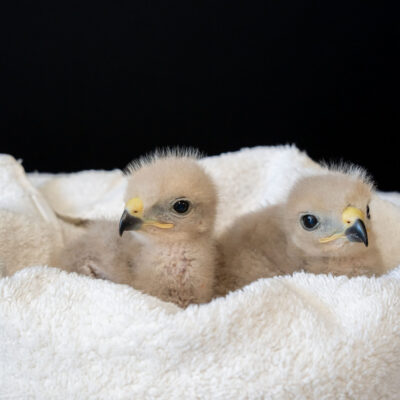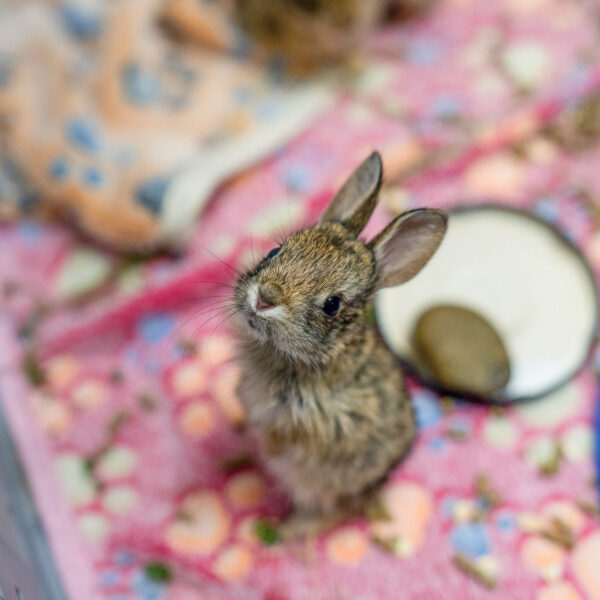
Whether you’re obsessed with opossums, a helper of herons, a sucker for squirrels, or a barn owl buff, your Species Sponsorship represents thousands of patients that are brought to the Wildlife Care Association (WCA) hospital in need of help and healing.
Your tax-deductible gift provides WCA with funds necessary to provide fresh fish and produce, medical care, and rehabilitation to our wild patients so we can get them back to the natural habitat they call home.
When you Sponsor-a-Species, not only do you get the satisfaction of knowing you are helping our team care for wildlife, you will also receive a digital sponsorship certificate, photo, and a fact sheet about the species you select.
This is a symbolic, digital-only sponsorship
To reduce costs and paper usage, everything will be sent digitally through email. When you sponsor one or more species, we will email you a Species Sponsorship certificate, a species information sheet, and a photo.
Please note that this is a download-only certificate which you can customize yourself after download.
Wildlife Animal You Can Sponsor

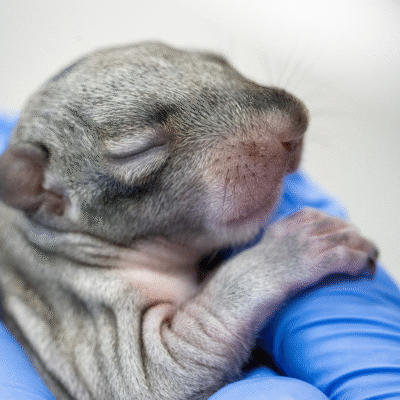
Western Gray Squirrel
HABITAT: Woodlands, forests, oak groves, and urban areas
DIET: Acorns, nuts, seeds, fruits, fungi, and vegetation
THREATS: Habitat loss, vehicle strikes, and predation
INTERESTING FACTS: Western gray squirrels are excellent climbers and spend much of their time in trees using their bushy tails for balance and communication. The gray squirrels’ strong memory helps them relocate hidden food caches where they often bury nuts to eat later.

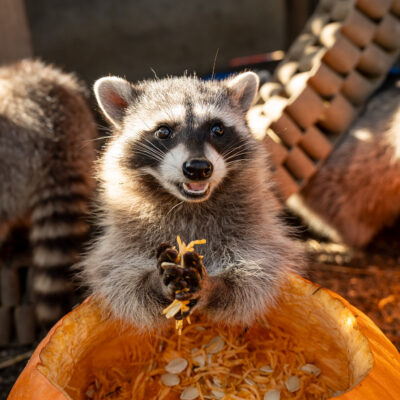
Northern Raccoon
HABITAT: Woodlands, forests, wetlands, fields, and urban areas
DIET: Fruits, nuts, insects, eggs, fish, small animals, and carrion
THREATS: Vehicle strikes, habitat loss, disease, and conflicts with people and pets
INTERESTING FACTS: Northern raccoons are highly adaptable and can thrive in both wild and urban environments. Their sensitive front paws help them explore and handle food, and they are excellent climbers and swimmers. Raccoons are mostly nocturnal and use their sharp memory and problem-solving skills to find food and navigate their surroundings.

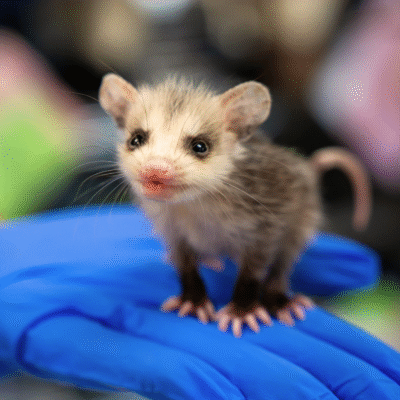
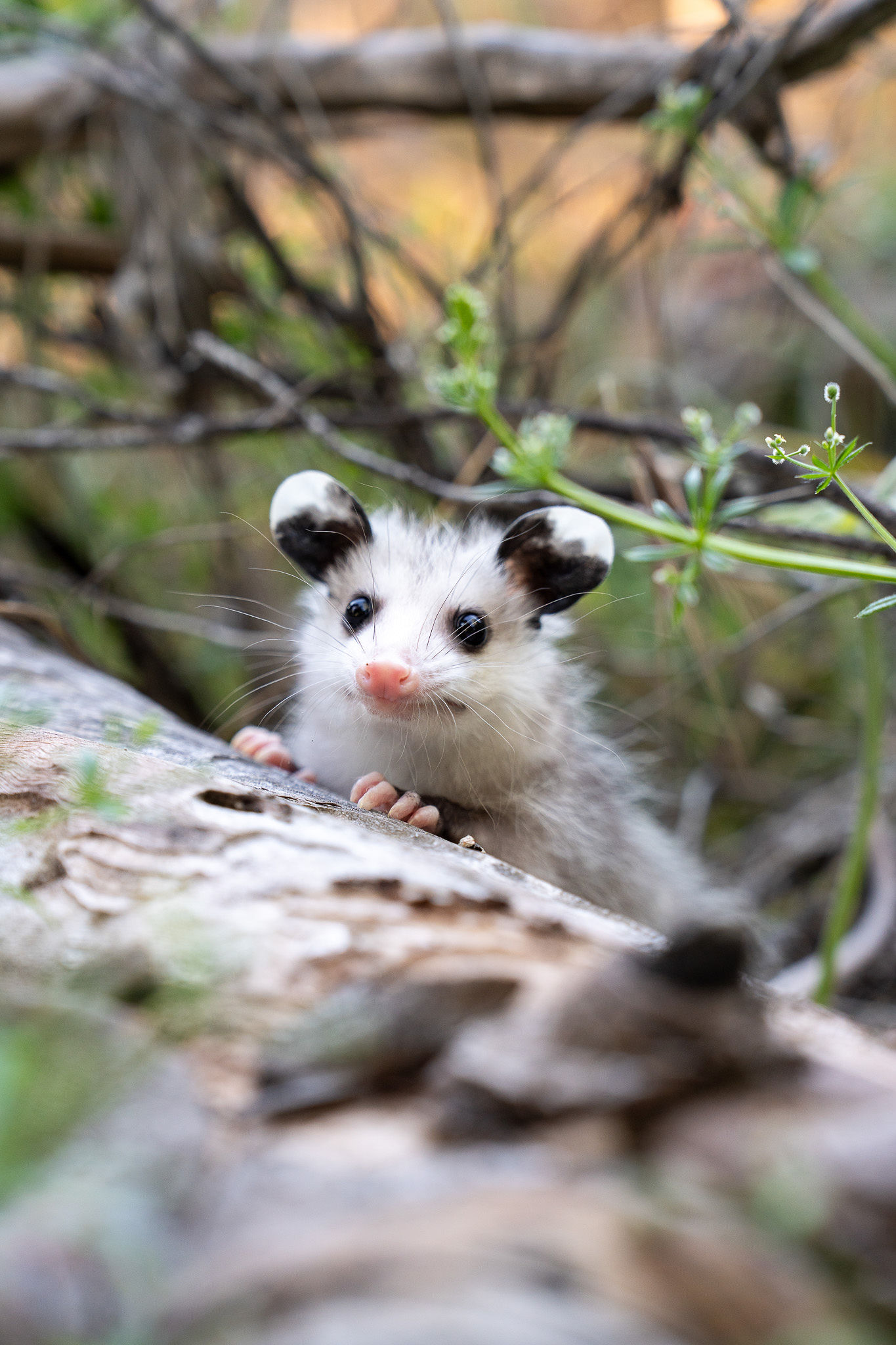
Virginia Opossum
HABITAT: Woodlands, forests, wetlands, fields, and urban areas
DIET: Fruits, insects, small animals, eggs, carrion, and vegetation
THREATS: Vehicle strikes, habitat loss, and attacks by pets
INTERESTING FACTS: Virginia opossums are North America’s only native marsupial. Mothers carry their young in a pouch during their early development; older babies often ride on their mother’s back. Opossums are excellent climbers, mostly nocturnal, and help ecosystems by eating pests and scavenging on carrion.

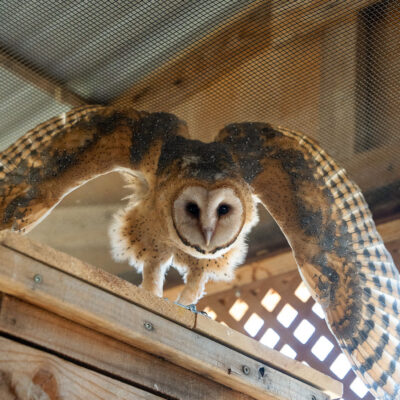
Barn Owl
HABITAT: Grasslands, open woodlands, farms, barns, and other open areas
DIET: Mice, voles, rats, small birds, and other small mammals
THREATS: Habitat loss, vehicle strikes, rodenticide poisoning, and loss of nesting sites
INTERESTING FACTS: Barn owls are excellent nighttime hunters and use their exceptional hearing to locate prey in complete darkness. Their heart-shaped facial disks help funnel sound to their ears, allowing them to pinpoint prey beneath grass and vegetation. They swallow their prey whole and later regurgitate pellets containing indigestible bones, fur, and feathers.

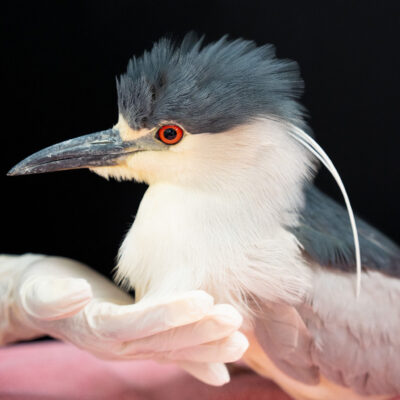
Black- Crowned Night Heron
HABITAT: Wetlands, marshes, ponds, rivers, and coastal areas
DIET: Fish, frogs, insects, crustaceans, small mammals, and other aquatic animals
THREATS: Habitat loss, water pollution, vehicle strikes, and disturbance of nesting areas
INTERESTING FACTS: Black-crowned night herons are most active at dusk and during the night, when they hunt by standing still and waiting for prey to come within reach. They have excellent night vision and can often be found perched in trees near water. Adults have a distinctive black crown and back, gray wings, and long white feathers extending from the head during breeding season.

Red-Tailed Hawk
HABITAT: Open fields, grasslands, woodlands, deserts, and urban areas
DIET: Rodents, rabbits, birds, reptiles, and other small animals
THREATS: Vehicle strikes, habitat loss, rodenticide poisoning, and human disturbance
INTERESTING FACTS: Red-tailed hawks are one of the most common hawks in North America and are known for their distinctive reddish-brown tails. They have excellent eyesight and can spot prey from up to 100 feet above ground. They often soar in circles on rising air currents to conserve energy while searching for food.